.png)

.png)

2.png)
How to Get a UAE Trade License via Free Zone - Process & Tips


Table of Contents
About the Author
The author is a UAE business setup and compliance consultant with over a decade of experience advising startups, SMEs, and international trading companies. Having worked closely with free zone authorities, banks regulated by the UAE Central Bank, and compliance teams, the author specializes in trade licensing, corporate structuring, and long-term market entry strategy.
What Most People Get Wrong About Free Zone Trade Licenses
If you search online for business setup advice in the UAE, you’ll see the same line repeated everywhere: “Just get a Free Zone trade license. It’s easy.”
After more than a decade of working with traders, importers, exporters, and international founders, we can tell you this: it is easy to get wrong.
A free zone trade license can be one of the smartest ways to enter the UAE market, or a decision that quietly limits your growth, delays your bank account, and forces restructuring within a year.
In this guide, we’ll explain how to get a UAE trade license for a free zone the right way, based on what actually works on the ground. We’ll share practical steps, common mistakes we’ve seen repeatedly, and real examples from trading businesses that either succeeded smoothly or learned costly lessons.
What a UAE Free Zone Trade License Actually Allows You to Do
A free zone trade license allows a company to import, export, distribute, and trade approved goods, primarily outside the UAE mainland or within the free zone itself.
This distinction is critical.
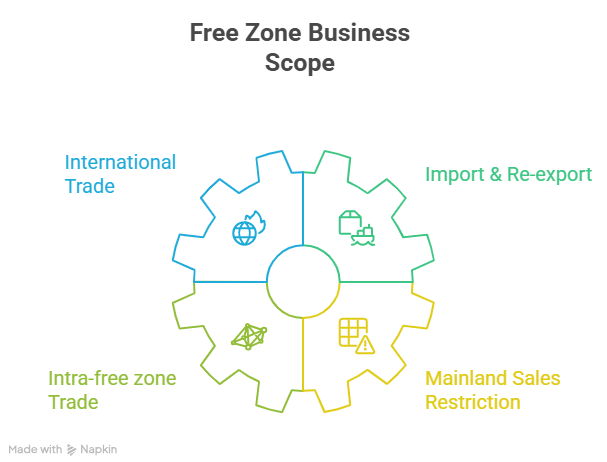
Many first-time founders assume a “trade license” gives unrestricted access to the UAE market. In reality, mainland sales require a different structure.
We’ve advised clients who only realized this after investing in inventory. With proper planning, this limitation isn’t a problem, but ignoring it causes serious friction later.
Why So Many Traders Choose Free Zones (And When It Makes Sense)
Free zones remain popular for good reason.
100% Ownership and Control
There’s no local partner requirement. For overseas investors and entrepreneurs, this alone makes free zones attractive.
Faster, More Predictable Setup
Compared to mainland structures, free zones usually offer clearer timelines and packages, especially for trading activities.
Strategic Locations for Trade
Many free zones sit next to ports, airports, and logistics hubs, ideal for import-export and distribution models.
Clear Cost Structure
License fees, office options, and visa quotas are usually bundled and transparent.
That said, free zones are not one-size-fits-all. Choosing the wrong one can affect banking, customs handling, and long-term expansion.
Step-by-Step: How to Get a UAE Trade License from a Free Zone (The Right Way)
This is the exact flow we explain to clients before they apply.
Step 1: Define Your Trading Activity Precisely
Trading activities in the UAE are tightly classified. Electronics, food items, supplements, building materials, and medical products, each category is treated differently.
Banks and regulators look closely at this.
- Expert experience: A trading company importing health supplements selected a broad “general trading” activity to speed things up. The license was issued, but two banks rejected their account because the activity didn’t reflect the product risk profile. The issue delayed operations by nearly two months.
Accuracy here matters more than speed.
Step 2: Choose the Free Zone Based on Banking and Trade Needs, Not Just Cost
Not all free zones are viewed equally by banks regulated by the UAE Central Bank.
Some free zones are known for strong compliance history, international credibility, or easier banking acceptance. Others are cheaper but raise red flags for certain trading models.
For example:
- Commodity or international traders often prefer established trade-focused free zones
- Cost-driven startups may choose flexible free zones, but must plan banking carefully
Saving on setup but failing to secure a bank account often costs more in the long run.
Step 3: Select the Right Legal Structure
Most free zone trading companies choose:
- A single-shareholder entity
- A multi-shareholder company
- A branch of a foreign company
If you plan to add partners, raise capital, or expand regionally, this decision becomes important. We’ve seen founders forced into restructuring within a year because future plans weren’t considered at setup.
Step 4: Trade Name Approval (Simple is Smart)
Trade names must follow UAE naming rules and reflect business activity. Overly creative names often face rejection.
- Expert insight: Clear and professional names move through approvals faster.
Step 5: Application Submission and Initial Approval
Once documents are submitted, the free zone authority reviews the application. This stage may include:
- Background checks
- Activity validation
- Shareholder verification
Initial approval confirms that the structure is accepted, but the company isn’t officially formed yet.
Step 6: Office, Flexi-Desk, or Warehouse Allocation
Many trading companies qualify for flexi-desk solutions. However:
- Warehousing may be required for physical goods
- Visa quotas often depend on office type
This choice impacts both cost and operational flexibility.
Step 7: License Issuance and Company Formation
Once fees are paid and documents finalized, the free zone issues:
- Trade license
- Company incorporation certificate
- Memorandum and Articles
At this point, the business is legally established, and you can proceed with visas and banking.
This is the complete, realistic picture of how to get a UAE trade license from a free zone, without shortcuts that later create problems.
Costs to Expect When Setting Up a Free Zone Trade License
Costs vary depending on the free zone, trading activity, office requirements, and visa needs. Typical cost components include:

One common mistake is budgeting only for setup and ignoring post-licensing requirements like banking, tax enrollment, and compliance.
Corporate Bank Accounts: Where Many Traders Get Stuck
This is where reality sets in. Banks assess trading companies based on:
- Product type
- Countries of trade
- Source of funds
- Shareholder background
- Free Zone reputation
Expert experience: A re-export business dealing with multiple jurisdictions had its bank account delayed for over eight weeks because its free zone had a limited trading history. The issue wasn’t the business, it was perception.
Choosing the right free zone and activity upfront significantly improves banking outcomes.
Common Mistakes Traders Make (After Helping Dozens Avoid Them)
After over a decade in this field, the same mistakes appear repeatedly:
- Selecting the cheapest free zone without considering banks
- Choosing vague or mismatched trading activities
- Assuming free zone companies can sell freely in the mainland
- Ignoring VAT and corporate tax obligations
- Planning only for year one, not year three
Most of these mistakes are avoidable with proper guidance.
Tax and Compliance: What Free Zone Traders Must Know
Free zone does not mean “no obligations.” Trading companies must understand:
- VAT enrollment thresholds under the Federal Tax Authority (FTA)
- Corporate tax rules and qualifying conditions
- Record-keeping and accounting requirements
Compliance issues don’t appear immediately, but when they do, fixing them retroactively is expensive.
Practical Advice Based on 10+ Years of UAE Business Setup Experience
If there’s one lesson we’ve learned, it’s this: free zone structures work best when they’re built with a clear trading strategy, not just a low setup cost.
The most successful trading companies plan banking, tax, logistics, and expansion from day one. The least successful are the ones that rush.
When set up properly, a free zone trade license remains one of the most efficient entry points into the UAE market.
How to Get a UAE Trade License via Free Zone — Process & Tips with RadiantBiz
When businesses start planning how to get a UAE trade license via a free zone, one common misconception RadiantBiz free zone business setup is the assumption that the cheapest or fastest licensing option is automatically the best.
In reality, free zone licensing decisions influence far more than just how quickly a trade license is issued. Early choices, such as the free zone selected, the approved trading activities, or the expected visa capacity, directly affect how the business operates day to day.
When these decisions are made without a clear view of operational needs or future growth, challenges often surface later. These may include limits on visa allocations, delays in bank account approvals, or the need to amend the license structure, all of which increase both time and cost.
We often see businesses obtain a free zone trade license smoothly, only to realise later that the chosen structure does not align with how the company actually functions. What appears simple during the application stage can complicate approvals with banks, free zone authorities, or expansion plans once the business becomes operational.
We approach free zone trade licensing with clarity and structure, not just speed. Our business setup consultants assess the business model, ownership structure, staffing plans, and long-term objectives before recommending a specific free zone and license setup. This ensures the trade license supports real operational needs rather than creating avoidable constraints.
When budgeting for a UAE free zone trade license, the depth of guidance behind the setup is often the difference between a smooth, predictable launch and costly corrections later.
FAQs
1. Can I sell directly to UAE mainland customers with a Free Zone trade license?
No. Direct mainland sales require a distributor or separate structure. This is one of the most common misunderstandings among first-time traders.
2. Do I need to be physically present in the UAE to obtain a Free Zone trade license?
In most cases, no. Many free zones allow remote setup, especially for overseas investors.
3. Is a Free Zone trade license suitable for international e-commerce businesses?
Yes. It works well for cross-border e-commerce and re-export models, provided banking and tax planning are handled correctly.
Is a Free Zone Trade License the Right Move for You?
A free zone trade license can be an excellent foundation for international trade and import-export businesses, if it fits your business model.
It works best when your primary markets are outside the UAE, when you plan trade and compliance together, and when you choose the free zone strategically.
If you’re evaluating how to get a UAE trade license from a free zone, take the time to structure it correctly. Fixing mistakes later almost always costs more than doing it right the first time.
Seek our professional on-the-ground guidance, contact us via mail at info@radiantbiz.com, WhatsApp, or call us at +971521322895!
.webp)
%20.webp)

Anjali Jawahar ensures the seamless execution of business setup processes, making compliance and licensing effortless for clients. Her keen attention to operational efficiency helps the RadiantBiz businesses establish themselves smoothly in the UAE.


.avif)


.svg)


.svg)
.svg)
.svg)

