.png)

.png)

2.png)
Dubai LLC vs Free Zone: Which Company Setup is Cheaper & Better For You?

Table of Contents
About the Author
The author is a business Consultant with over a decade of experience helping startups, SMEs, and corporates navigate Dubai LLC and free zone setups, having advised clients across DMCC, DIFC, JAFZA, and the Dubai mainland, optimizing costs, compliance, and growth strategies.
Key Takeaway:
- Free zone setups typically have lower initial costs and flexible office options, making them ideal for startups and export-focused businesses. However, if mainland operations are required later, additional agent and compliance costs can outweigh the early savings.
- If your business plans to serve mainland clients or secure government contracts, a Dubai LLC provides full operational freedom across the UAE. Free zones are better suited for international trade, remote services, or businesses not targeting the local UAE market.
- Many businesses choose the “cheapest” option without considering visas, banking, licensing flexibility, or future expansion. Aligning your company structure with long-term goals from the start can save significant time, money, and regulatory complications.
Dubai LLC or Free Zone? Why the “Cheapest” Option isn’t Always the Smartest
Starting a business in Dubai is exciting, but the first decision you make can save or cost you tens of thousands of dirhams down the line. One of the most common questions we hear from entrepreneurs is: “Dubai LLC vs free zone, which is cheaper?” The answer isn’t as simple as it seems. Cost is only part of the story, flexibility, legal compliance, and growth potential are just as important.
In this article, we’ll share insights from over a decade of helping businesses set up in Dubai. We’ll cover costs, legal differences, banking, visas, and long-term growth considerations.
By the end, you’ll know which setup is cheaper for your situation and which structure is better for your business goals.
Understanding Dubai LLC and Free Zone Companies
Before comparing costs, it’s important to understand the two options:
Dubai LLC (Mainland Company)
A Dubai LLC is a traditional mainland company regulated by the Department of Economy and Tourism (DET). Historically, LLCs required a UAE national to hold 51% ownership, but recent reforms now allow 100% foreign ownership for most business activities.
Key Features of an LLC in Dubai Mainland:
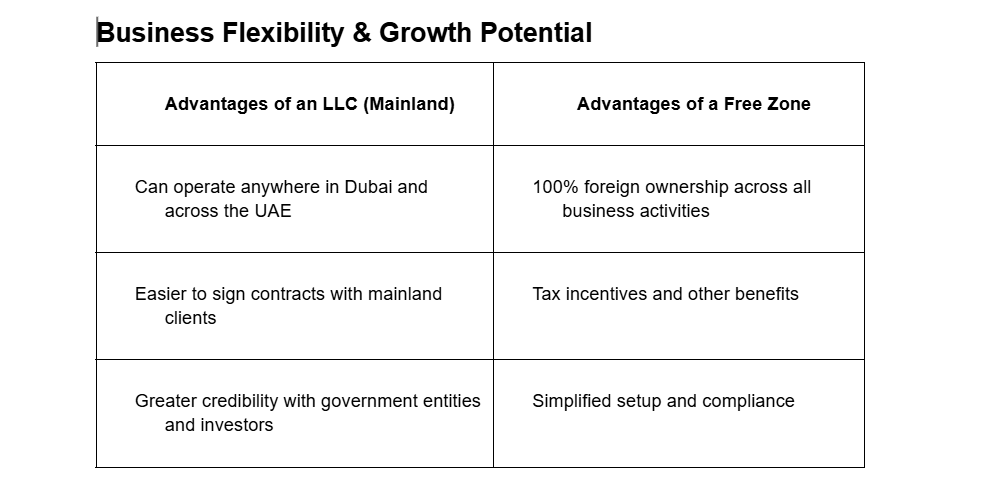
- Can operate anywhere in Dubai and across the UAE
- Full access to government contracts and mainland clients
- A wide range of business activities allowed
- Requires a physical office for licensing
- Limited liability for shareholders
Based on our experience, LLCs are ideal for businesses that want full operational flexibility.
Expert experience: A trading company we advised in 2020 chose an LLC setup. Although the initial setup cost was higher, by 2023, they had secured multiple mainland clients and avoided additional licensing hurdles, saving tens of thousands in the long run.
Free Zone Companies
Free Zone companies operate in designated zones such as DMCC, DIFC, JAFZA, Dubai Internet City, and others. They are attractive for entrepreneurs because:
- 100% foreign ownership is allowed
- Licensing is faster and simpler
- Tax incentives are often available
Limitations:
- Cannot operate directly in the UAE mainland without a local service agent or distributor
- Limited flexibility for certain business activities
- Office space requirements vary depending on the zone
We've seen many startups initially opt for a free zone business setup Dubai to save money, only to realize within a year that they needed a local agent to serve mainland clients, costing an additional AED 10,000–25,000 ($2,700–6,800).
Cost Comparison: Dubai LLC vs Free Zone
Now, let’s address the burning question: Dubai LLC vs free zone, which is cheaper?
1. Initial Setup Costs
Dubai LLC:
- Trade license: AED 10,000–15,000 ($2,720–4,080)
- Enrollment fees: AED 10,000–15,000 ($2,720–4,080)
- Office rent: AED 5,000–20,000 ($1,360–5,440) (depending on size and location)
Total: AED 20,000–50,000 ($5,440–13,610)
Free Zone:
- License fees: AED 15,000–30,000 ($4,080–8,160)
- Optional virtual office: AED 5,000–10,000 ($1,360–2,720)
- Enrollment & other charges: AED 3,000–5,000 ($820–1,360)
Total: AED 15,000–30,000 ($4,080–8,160)
Observation: Free zones are generally cheaper upfront, especially for small teams or export-oriented businesses.
2. Ongoing Costs
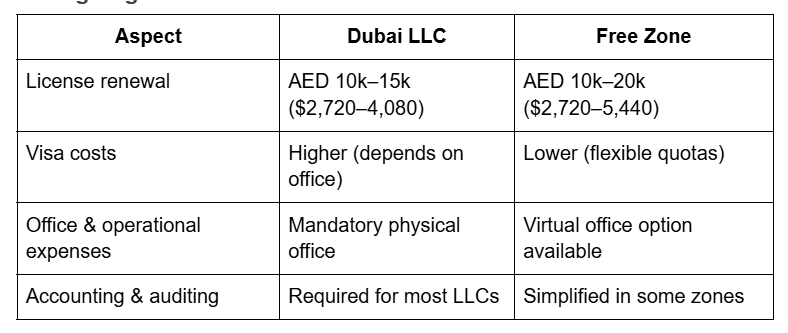
Based on our consulting experience, small businesses often underestimate annual costs. A free zone company may save on office rent, but could incur additional fees if it expands to the mainland.
An LLC might cost more initially, but it often ends up cheaper if you plan long-term mainland operations.
3. Hidden Costs
Some of the costs that entrepreneurs often overlook include:
- Local service agent fees for free zone companies wanting mainland clients (AED 5,000–15,000 ($1,360–4,080) per year)
- Additional licensing for new business activities
- Auditing and compliance fees
- Bank account setup charges
Expert experience: A consultancy we advised in 2019 started in a free zone to save costs. Within 12 months, they needed mainland access. The total extra cost for agent fees and approvals exceeded AED 25,000 ($6,807), which would have been avoided with an LLC setup.
Legal & Regulatory Considerations
Dubai LLC
- Regulated by DET under UAE Civil Law
- Contracts, labor, and operations follow UAE law
- Full flexibility to operate in mainland Dubai and across the UAE
Free Zone
- Regulated by the free zone authority
- Scope of business limited to the free zone and international markets
- Banking is often simplified, but mainland operations require extra approvals
Choosing the wrong structure for your business model is a common mistake. A business that expects to serve clients nationwide almost always benefits from an LLC to avoid additional approvals and long-term costs.
Expert experience: A tech startup in DMCC saved AED 20,000 ($5,445) in initial costs with a free zone setup. However, within a year, they had to engage a local service agent for mainland operations, adding AED 12,000 ($3,268) in additional fees. If they had started with an LLC, these extra costs would have been avoided.
Expert insight: A free zone is best for businesses focused on exports or clients outside the UAE. LLC is better for businesses targeting the local market or government contracts.
Banking, Tax & Visa Considerations
Corporate Bank Accounts
Free Zone companies often get faster approvals. LLCs may face additional compliance checks, but offer access to more banks and larger corporate services.
Corporate Tax
The UAE has 0%-9% corporate tax depending on profit for businesses on the mainland, whereas free zone businesses qualify for exemptions based on qualifying business activities.
Visas
Free zones offer flexible quotas, LLCs require physical office space to qualify for multiple visas.
Based on our experience, visa planning is often overlooked. Small teams in free zones save money, but growing companies may need multiple visas sooner than anticipated.
Expert Tips for Cost-Effective Setup
1. Choose the right free zone for your business activity
DMCC for commodities, DIFC for finance, Dubai Internet City for IT.
2. Plan for long-term operations
If you expect to serve mainland clients, consider an LLC upfront to avoid conversion costs.
3. Consider virtual offices
Free zones often allow this to reduce overhead.
4. Negotiate office space wisely
Especially for LLCs, location and size impact cost significantly.
5. Factor in hidden costs
Sponsorship, approvals, auditing, and visas can surprise new business owners.
Dubai LLC vs Free Zone with RadiantBiz
When comparing a Dubai LLC to a free zone setup, the “cheaper or faster” option isn’t always the smartest choice. At RadiantBiz, our business setup consultants see many businesses assume that the quickest free zone trade license automatically meets all their operational needs.
In reality, early decisions, like the selected free zone, approved trading activities, or visa capacity, directly impact daily operations and long-term growth.
Without strategic planning, businesses often face limitations later: visa allocation issues, delays in opening bank accounts, or the need to amend the license structure, adding both time and cost.
RadiantBiz approaches trade licensing with a structured, consultative method, assessing ownership, staffing, business model, and growth objectives to ensure the chosen setup supports real operations and avoids unnecessary complications.
For businesses planning a UAE setup in 2026, the right guidance can save significant costs, time, and stress, making the difference between a smooth launch and costly corrections down the line.
FAQs
1. Can a free zone company operate in the Dubai mainland?
Yes, but a local service agent or distributor is required, adding extra costs.
2. Which is generally cheaper: a Dubai LLC or a free zone setup?
A free zone is cheaper for small teams and export-focused businesses. LLC offers better long-term value if serving mainland clients.
3. Can I convert a free zone company into an LLC later?
Yes, conversion is possible, but it requires additional approvals and costs.
Which is Cheaper and Better for Your Dubai Business in 2026?
So, Dubai LLC vs free zone, which is cheaper?
Based on short-term cost, free zone setups are usually cheaper for small teams or export-oriented businesses.
Based on long-term flexibility, LLCs provide better operational freedom, especially if you plan to serve mainland clients or government contracts.
The best approach is to match your business model, client base, and growth strategy with the right structure. A well-planned setup avoids unnecessary costs, legal complications, and operational delays.
If you’re planning your Dubai business setup in 2026, consult an experienced advisor to review costs, compliance requirements, and long-term strategy, saving both money and time.
Seek our professional on-the-ground guidance, contact us via mail at info@radiantbiz.com, WhatsApp, or call us at +971521322895!

.webp)
%20.webp)

With over 15 years of experience in the banking and business consulting sector, Rizwan Ansari leads RadiantBiz with a vision to simplify business setup in the UAE.


.avif)


.svg)


.svg)
.svg)
.svg)

