.png)

.png)

2.png)
How to Start an Oil Trading Business in the UAE: Expert Advice on Costs & Licensing


Table of Contents
About the Author
The author is a business consultant specializing in oil trading, commodities, and corporate setup in the UAE. With over a decade of experience advising local and international clients, having helped more than 15,000 companies navigate licensing, regulatory compliance, and operational planning for oil and energy trading.
Key Takeaway:
- Strong export volumes, world-class ports, and free zone incentives make the UAE ideal for oil trading, but strict licensing, customs, and regulatory compliance are non-negotiable. Traders who understand cross-border rules and regulatory expectations from day one move faster and face fewer disruptions.
- Mainland, free zone, and offshore setups serve very different operational needs. Oil traders who select jurisdictions without aligning them to their actual trading model often face banking delays, license amendments, or scaling issues later, adding time and cost.
- Oil trading requires significant upfront investment in licensing, operations, and trade finance. Businesses that plan realistically, work with experienced banks and insurers, and seek expert advisory support avoid costly mistakes and scale more efficiently.
Starting an Oil Trading Business in the UAE: What You Must Get Right from Day One
Starting an oil trading business in the UAE can be incredibly rewarding, but only if you approach it with the right knowledge, planning, and compliance. Having worked with businesses from the oil trading sector and advising UAE businesses for over a decade, we’ve seen firsthand what separates successful traders from those who struggle.
If you’re wondering how to start an oil trading business in the UAE, this guide will walk you through every critical step, from company structure and licensing to operational costs, logistics, and common pitfalls. By the end, you’ll have a clear roadmap to launch a compliant, profitable oil trading business in the UAE.
Understanding the UAE Oil Trading Market
The UAE isn’t just a global oil producer, it’s a hub for international oil trade. Dubai, Abu Dhabi, and the free zones within these cities offer a robust infrastructure for trading crude oil, refined products, and lubricants.
According to the UAE Ministry of Energy & Infrastructure, the country exported over 2.5 million barrels of crude oil per day in 2025, making it a strategic location for traders looking to tap into regional and international markets.
Based on our experience, the UAE’s advantage lies in its combination of regulatory clarity, world-class ports, and free zone incentives. We worked with a client who initially struggled to find reliable suppliers in Saudi Arabia and buyers in India.
After establishing a company through DMCC Free Zone Business Setup, we structured contracts and logistics that allowed them to complete their first shipment in under three months — something that would have taken over a year in any other GCC country.
For anyone entering this market, understanding both domestic and cross-border trading rules is key. The UAE allows seamless international trade, but compliance is strictly enforced.s
Choosing the Right Business Jurisdiction
Before trading a single barrel, you must select the correct jurisdiction. The UAE offers three main options:
1. Mainland Company
Allows trading across the UAE market and now allows 100% foreign ownership for qualifying activities. Oil trading on the UAE mainland does not categorically require a local partner, but it may still be subject to special government approvals or restrictions depending on the specific activity. It is ideal if your target customers are based locally.
2. Free Zone Company
Fully foreign-owned in most cases, and optimized for international trade. Free zones like DMCC and Jebel Ali Free Zone where JAFZA Company Formation is straightforward and trade-friendly are particularly suitable for commodities trading.
3. Offshore Company
Mainly for holding purposes or international trading without physical UAE operations.
Based on our consulting experience, beginners often choose free zones for faster setup and lower operational costs. Mainland business setups provide local market access but involve more complex compliance and higher fees.
- Expert experience: A client wanted to trade refined diesel products across the GCC. By establishing a JAFZA free zone company, they avoided local partner requirements and streamlined their export contracts. Within six months, they had secured three long-term buyers.
Licensing Requirements for Oil Trading
Licensing is a critical step, and mistakes here can be costly. In the UAE, oil trading requires multiple approvals:
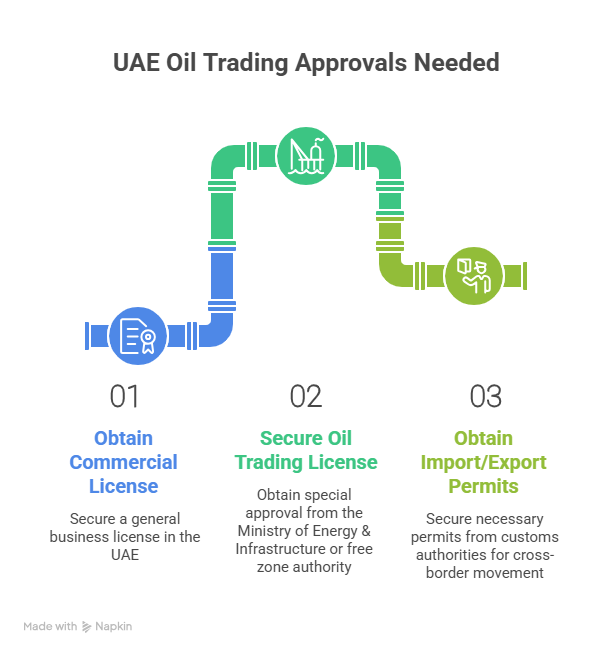
Commercial License
Required for any UAE business.
Oil Trading License
Special approval to trade petroleum products, obtained via the Ministry of Energy & Infrastructure or the relevant free zone authority.
Import/Export Permits
Necessary for moving oil across borders. Customs authorities require these before allowing shipments.
- Expert advice: Licenses must be maintained annually. Non-compliance can lead to fines, delays, or even suspension of operations.
- Expert experience: One client attempted trading without an oil-specific license. Customs flagged their shipment, risking a fine exceeding AED 50,000 ($13,500). We secured the proper approvals within two weeks, avoiding penalties and allowing the shipment to proceed.
Estimating Costs for Starting an Oil Trading Business
Budgeting properly is critical. Many traders underestimate how much capital is needed. Here’s a practical breakdown based on years of advising clients:
Company Setup & Licensing
AED 50,000–200,000 ($13,500–54,000) depending on the jurisdiction (free zone vs. mainland).
Office & Warehousing
Even if you don’t physically handle oil, a licensed address is required. Storage costs vary; tank rentals for refined products can exceed AED 50,000 ($13,500) annually.
Operational Costs
Staff salaries, logistics, insurance, and audits typically cost AED 100,000–150,000 ($27,000–40,800) per year for a small operation.
Trade Finance & Bank Guarantees
Letters of credit and working capital requirements can exceed AED 500,000 ($136,150) for significant trade volumes.
- Expert experience: A client started small with a DMCC license and a lean team. Initial setup and licensing cost AED 120,000 ($32,675). Within two years, trading volume increased, and operational costs rose, but the initial structure allowed them to scale efficiently without restructuring.
Banking, Finance, and Insurance
Oil trading is capital-intensive, so your financial setup must be solid:
Corporate Bank Account
UAE banks require compliance documents and detailed business plans for oil trading clients.
Trade Finance
Letters of credit (LCs) secure payments between buyers and suppliers. We’ve seen traders lose months waiting for payments because LC terms weren’t structured correctly.
Insurance
Cargo insurance, liability coverage, and storage insurance protect against unforeseen losses.
- Expert advice: Work with banks and insurers experienced in commodities. This saves time and prevents compliance delays.
Operations and Logistics
Even if your focus is trading, logistics remain essential:
Supplier and Buyer Vetting
Verify all partners carefully. Fraud or unreliable suppliers can derail your business.
Storage & Transport
Crude and refined oil require different handling. Use licensed warehouses and transport providers.
Customs & Compliance
Ensure all shipments meet environmental and safety regulations. Non-compliance can result in heavy fines.
- Expert experience: One client underestimated storage capacity and faced delays in clearing shipments through customs. By partnering with a licensed free zone warehouse and approved logistics providers, the problem was resolved, and shipments moved smoothly to international buyers.
Common Challenges and How to Avoid Them
Some hurdles are inevitable in oil trading:
Regulatory Non-Compliance
Always check licensing and reporting requirements. We’ve seen traders penalized simply for late renewals.
Market Volatility
Oil prices fluctuate daily. Use trade contracts and hedging strategies to manage risk.
Fraud & Counterparty Risk
Perform due diligence on all clients and suppliers.
- Expert insight: Traders who build strong relationships with regulators, banks, and industry peers avoid most pitfalls. Compliance and credibility are just as important as your trading deals.
Expert Tips for Success
- Plan Licensing Carefully
Choose a free zone or the mainland based on your business goals.
- Start Small, Scale Gradually
Focus on a niche and secure reliable suppliers before expanding.
- Leverage Technology
Use trade management software to track shipments and inventory.
- Network in the Industry
Join the DMCC Commodities Association or attend local conferences for insights and connections.
Following these steps will make your entry into the UAE oil trading market smooth, efficient, and compliant.
How to Start an Oil Trading Business in the UAE with RadiantBiz
When starting an oil trading business in the UAE, many founders assume the fastest or lowest-cost free zone license is the right choice. In oil trading, this approach often creates problems later.
License structure, approved trading activities, visa capacity, and free zone selection all affect banking approvals, compliance, and day-to-day operations. We frequently see oil trading companies forced to amend their licenses because the original setup didn’t reflect how the business actually trades.
RadiantBiz approaches oil trading setup with clarity, not shortcuts. We assess the trading model, product scope, banking requirements, and growth plans before recommending a business jurisdiction and license structure, ensuring the setup supports real operations from day one.
Getting the structure right early avoids regulatory delays, banking issues, and unnecessary costs later.
FAQs
1. How much does it cost to start an oil trading business in the UAE?
Setup and licensing costs range from AED 50,000 to 200,000 ($13,600–54,400). Operational costs, insurance, and trade finance can add AED 100,000–500,000 ($27,000–136,000) depending on scale.
2. Can foreigners fully own an oil trading company in the UAE?
Yes, free zones generally allow 100% foreign ownership. Mainland companies may require a local partner unless the business qualifies for full foreign ownership under UAE regulations.
3. Is special licensing required for importing and exporting oil in the UAE?
Yes. Beyond a commercial license, an oil trading license is mandatory, along with import/export permits for customs clearance.
Why Expert Guidance Makes the Difference in UAE Oil Trading
Starting an oil trading business in the UAE can be highly profitable, but success hinges on proper planning, compliance, and operational strategy. Understanding the market, choosing the right company structure, securing licenses, estimating costs, and managing logistics are all critical.
Partnering with an experienced consultant can save time, money, and regulatory headaches. Contact a licensed advisor today to guide you through licensing, setup, and operational planning for your UAE oil trading business.
Seek our professional on-the-ground guidance, contact us via mail at info@radiantbiz.com, WhatsApp, or call us at +971521322895!

.webp)

.webp)
With over 15 years of experience in the banking and business consulting sector, Rizwan Ansari leads RadiantBiz with a vision to simplify business setup in the UAE.


.avif)


.svg)


.svg)
.svg)
.svg)

